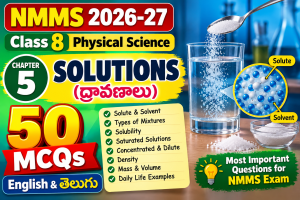
📚 NMMS Class 8 Physical Science Chapter 5 – SOLUTIONS | 50 Most Important MCQs | English & Telugu_Test-5 by admin | Oct 30, 2026 | Uncategorized | 0 comments 📚 NMMS Class 8 Physical Science Chapter 5 – SOLUTIONS | 50 Most Important MCQs | English & Telugu_Test-5 📚 NMMS Class 8 Physical Science Chapter 5 – SOLUTIONS | 50 Most Important MCQs | English & Telugu_Test-5 1 / 10 46. Assertion (A): Cold water can contain more dissolved oxygen than warm water. వాదన (A): వెచ్చని నీటికంటే చల్లని నీటిలో ఎక్కువ ఆక్సిజన్ కరిగి ఉండగలదు. Reason (R): The solubility of gases in liquids generally decreases as temperature increases. కారణం (R): ఉష్ణోగ్రత పెరిగే కొద్దీ ద్రవాలలో వాయువుల ద్రావణీయత సాధారణంగా తగ్గుతుంది. Both Assertion and Reason are true, and Reason correctly explains Assertion / వాదన, కారణం రెండూ నిజం; కారణం వాదనకు సరైన వివరణ Assertion is true, but Reason is false / వాదన నిజం; కారణం తప్పు Assertion is false, but Reason is true / వాదన తప్పు; కారణం నిజం Both are true, but Reason does not correctly explain Assertion / రెండూ నిజం; కానీ కారణం వాదనకు సరైన వివరణ కాదు Incorrect. Please review the explanation. / తప్పు. దయచేసి వివరణను చదవండి. Correct! / సరైన సమాధానం! Both statements are true, and the reason directly explains why cold water can contain more dissolved oxygen. / రెండు వాక్యాలూ నిజం. వాయువుల ద్రావణీయత ఉష్ణోగ్రత పెరిగితే తగ్గుతుంది కాబట్టి చల్లని నీటిలో ఎక్కువ ఆక్సిజన్ కరుగుతుంది. 2 / 10 2. In salt water, which substance is the solute? ఉప్పునీటిలో ద్రావితం (Solute) ఏది? Both salt and water / ఉప్పు మరియు నీరు రెండూ Neither / ఏదీ కాదు Water / నీరు Salt / ఉప్పు Incorrect. Please review the explanation. / తప్పు. దయచేసి వివరణను చదవండి. Correct! / సరైన సమాధానం! The solid that dissolves in the liquid is called the solute. Salt dissolves in water. / ద్రవంలో కరిగే ఘన పదార్థాన్ని ద్రావితం అంటారు. ఉప్పు నీటిలో కరుగుతుంది. 3 / 10 21. Two solutions are prepared: 2 spoons of salt in 100 mL water and 4 spoons of salt in 50 mL water. Which is more concentrated? రెండు ద్రావణాలు తయారు చేశారు: 100 mL నీటిలో 2 చెంచాల ఉప్పు, 50 mL నీటిలో 4 చెంచాల ఉప్పు. ఏది ఎక్కువ గాఢమైనది? Second solution / రెండవ ద్రావణం Cannot contain salt / ఉప్పు ఉండదు Both have equal concentration / రెండింటి గాఢత సమానం First solution / మొదటి ద్రావణం Incorrect. Please review the explanation. / తప్పు. దయచేసి వివరణను చదవండి. Correct! / సరైన సమాధానం! The second solution has more salt relative to a smaller quantity of water (4 spoons in 50 mL), so it is more concentrated. / రెండవ ద్రావణంలో తక్కువ నీటికి ఎక్కువ ఉప్పు ఉంది. అందువల్ల అది ఎక్కువ గాఢమైనది. 4 / 10 11. In air, which gas is considered the solvent? గాలిలో ద్రావణిగా పరిగణించబడే వాయువు ఏది? Oxygen / ఆక్సిజన్ Carbon dioxide / కార్బన్ డయాక్సైడ్ Nitrogen / నైట్రోజన్ Argon / ఆర్గాన్ Incorrect. Please review the explanation. / తప్పు. దయచేసి వివరణను చదవండి. Correct! / సరైన సమాధానం! Nitrogen is present in the largest amount in air, so it is considered the solvent; other gases are solutes. / గాలిలో నైట్రోజన్ అత్యధిక పరిమాణంలో ఉంటుంది. అందువల్ల దానిని ద్రావణిగా, ఇతర వాయువులను ద్రావితాలుగా పరిగణిస్తారు. 5 / 10 1. What is a solution? ద్రావణం (Solution) అంటే ఏమిటి? An insoluble substance / కరగని పదార్థం A uniform mixture / సమాంగ మిశ్రమం A non-uniform mixture / అసమాంగ మిశ్రమం A pure element / స్వచ్ఛమైన మూలకం Incorrect. Please review the explanation. / తప్పు. దయచేసి వివరణను చదవండి. Correct! / సరైన సమాధానం! A solution is a uniform mixture in which the components are evenly distributed. / ద్రావణంలో భాగాలు సమానంగా విస్తరించి ఉంటాయి; అందువల్ల అది సమాంగ మిశ్రమం. 6 / 10 12. What happens to the solubility of most solid substances when temperature increases? ఉష్ణోగ్రత పెరిగినప్పుడు చాలా ఘన పదార్థాల ద్రావణీయతకు ఏమవుతుంది? It always remains unchanged / ఎల్లప్పుడూ మారదు It increases / పెరుగుతుంది It decreases / తగ్గుతుంది It becomes zero / సున్నా అవుతుంది Incorrect. Please review the explanation. / తప్పు. దయచేసి వివరణను చదవండి. Correct! / సరైన సమాధానం! The chapter states that for most substances, the solubility of solids increases with temperature. / చాలా పదార్థాల విషయంలో ఉష్ణోగ్రత పెరిగే కొద్దీ ఘన పదార్థాల ద్రావణీయత పెరుగుతుంది. 7 / 10 22. A saturated baking soda solution at 25°C is heated to 50°C. What is expected according to the chapter? 25°C వద్ద సంతృప్తంగా ఉన్న బేకింగ్ సోడా ద్రావణాన్ని 50°Cకు వేడి చేస్తే పాఠ్యభాగం ప్రకారం ఏమి జరుగుతుంది? Solubility becomes zero / ద్రావణీయత సున్నా అవుతుంది Some more baking soda can dissolve / మరికొంత బేకింగ్ సోడా కరుగుతుంది Baking soda becomes a gas / బేకింగ్ సోడా వాయువుగా మారుతుంది All water evaporates immediately / నీరంతా వెంటనే ఆవిరవుతుంది Incorrect. Please review the explanation. / తప్పు. దయచేసి వివరణను చదవండి. Correct! / సరైన సమాధానం! For most solids, solubility increases with temperature. Heating can make the saturated solution behave as an unsaturated solution. / చాలా ఘన పదార్థాల ద్రావణీయత ఉష్ణోగ్రతతో పెరుగుతుంది. వేడి చేయడం వల్ల సంతృప్త ద్రావణం అసంతృప్త ద్రావణంలా మారవచ్చు. 8 / 10 31. Consider the following statements: 1. Air is a gaseous solution. 2. Nitrogen is considered the solvent in air. 3. Oxygen is the solvent because it supports respiration. Which of the statements are correct? క్రింది వాక్యాలను పరిశీలించండి: 1. గాలి ఒక వాయు ద్రావణం. 2. గాలిలో నైట్రోజన్ను ద్రావణిగా పరిగణిస్తారు. 3. శ్వాసక్రియకు తోడ్పడుతుంది కాబట్టి ఆక్సిజన్ ద్రావణి. సరైన వాక్యాలు ఏవి? 1 only / 1 మాత్రమే 1, 2 and 3 / 1, 2 మరియు 3 1 and 2 only / 1 మరియు 2 మాత్రమే 2 and 3 only / 2 మరియు 3 మాత్రమే Incorrect. Please review the explanation. / తప్పు. దయచేసి వివరణను చదవండి. Correct! / సరైన సమాధానం! Air is a gaseous solution. Nitrogen is the largest component and is treated as the solvent. Oxygen is a solute. / గాలి వాయు ద్రావణం. గాలిలో నైట్రోజన్ అత్యధికంగా ఉండటం వల్ల దానిని ద్రావణిగా పరిగణిస్తారు. ఆక్సిజన్ ద్రావితం. 9 / 10 32. Consider the following statements about solubility: 1. Solubility is the maximum amount of solute that dissolves in a fixed quantity of solvent at a particular temperature. 2. Solubility of most solids increases with temperature. 3. Solubility of gases in liquids generally increases with temperature. Which are correct? ద్రావణీయత గురించి క్రింది వాక్యాలను పరిశీలించండి: 1. నిర్దిష్ట ఉష్ణోగ్రత వద్ద నిర్దిష్ట పరిమాణంలోని ద్రావణిలో కరిగే ద్రావితం గరిష్ఠ పరిమాణమే ద్రావణీయత. 2. చాలా ఘన పదార్థాల ద్రావణీయత ఉష్ణోగ్రతతో పెరుగుతుంది. 3. ద్రవాలలో వాయువుల ద్రావణీయత సాధారణంగా ఉష్ణోగ్రతతో పెరుగుతుంది. సరైనవి ఏవి? All three / మూడూ 1 and 2 only / 1 మరియు 2 మాత్రమే 2 and 3 only / 2 మరియు 3 మాత్రమే 1 and 3 only / 1 మరియు 3 మాత్రమే Incorrect. Please review the explanation. / తప్పు. దయచేసి వివరణను చదవండి. Correct! / సరైన సమాధానం! The first two statements agree with the chapter. Gas solubility generally decreases as temperature rises, so statement 3 is incorrect. / మొదటి రెండు వాక్యాలు సరైనవి. ఉష్ణోగ్రత పెరిగినప్పుడు వాయువుల ద్రావణీయత సాధారణంగా తగ్గుతుంది కాబట్టి మూడవది తప్పు. 10 / 10 41. Match the terms with their correct meanings. పదాలను సరైన అర్థాలతో జతపరచండి. Column A / నిలువు వరుస A 1. Solute / ద్రావితం 2. Solvent / ద్రావణి 3. Solution / ద్రావణం 4. Solubility / ద్రావణీయత Column B / నిలువు వరుస B a. Uniform mixture / సమాంగ మిశ్రమం b. Substance that dissolves / కరిగే పదార్థం c. Substance in which another substance dissolves / మరొక పదార్థం కరిగే పదార్థం d. Maximum amount that dissolves at a particular temperature / నిర్దిష్ట ఉష్ణోగ్రత వద్ద కరిగే గరిష్ఠ పరిమాణం 1-d, 2-a, 3-c, 4-b 1-a, 2-d, 3-b, 4-c 1-b, 2-c, 3-a, 4-d 1-c, 2-b, 3-d, 4-a Incorrect. Please review the explanation. / తప్పు. దయచేసి వివరణను చదవండి. Correct! / సరైన సమాధానం! A solute dissolves in a solvent; together they form a solution. Solubility is the maximum amount that dissolves at a particular temperature. / ద్రావితం ద్రావణిలో కరిగి ద్రావణాన్ని ఏర్పరుస్తుంది. నిర్దిష్ట ఉష్ణోగ్రత వద్ద కరిగే గరిష్ఠ పరిమాణమే ద్రావణీయత. Your score isThe average score is 0% Views: 16 Submit a Comment Cancel replyYour email address will not be published. Required fields are marked *Comment * Name * Email * Website Save my name, email, and website in this browser for the next time I comment.