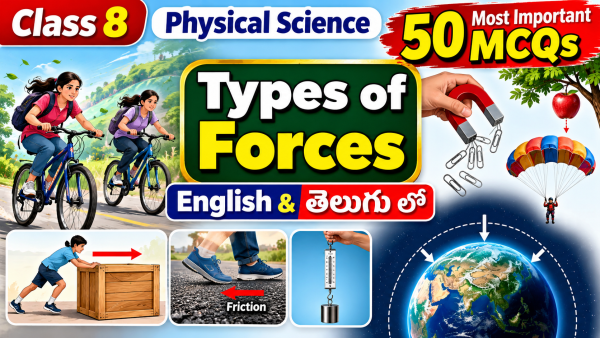
Class 8 Physical Science Chapter 2: Types of Forces | 10 Most Important MCQs | NMMS 2026-Test-3 by admin | Nov 1, 2026 | NMMS 2026, class 8 science, Uncategorized | 0 comments Class 8 Physical Science Chapter 2: Types of Forces | 10 Most Important MCQs | NMMS 2026-Test-3 Class 8 Physical Science Chapter 2: Types of Forces | 50 Most Important MCQs | NMMS 2026 1 / 10 Like poles of two magnets are brought close together. What happens? రెండు అయస్కాంతాల సమాన ధ్రువాలను దగ్గరగా తీసుకువస్తే ఏమవుతుంది? 0 They attract / ఆకర్షించుకుంటాయి They repel / వికర్షించుకుంటాయి They melt / కరుగుతాయి They lose all mass / ద్రవ్యరాశి కోల్పోతాయి Incorrect. Please review the explanation. / తప్పు. దయచేసి వివరణను చదవండి. Correct! / సరైన సమాధానం! Explanation (English + Telugu): Like magnetic poles repel; unlike poles attract. / సమాన అయస్కాంత ధ్రువాలు వికర్షించుకుంటాయి; భిన్న ధ్రువాలు ఆకర్షించుకుంటాయి. 2 / 10 Which of these is a non-contact force? వీటిలో స్పర్శరహిత బలం ఏది? Muscular force / కండర బలం Magnetic force / అయస్కాంత బలం Push by hand / చేతితో తోసే బలం Friction / ఘర్షణ 0 Incorrect. Please review the explanation. / తప్పు. దయచేసి వివరణను చదవండి. Correct! / సరైన సమాధానం! Explanation (English + Telugu): A magnet can exert force from a distance without touching the object. / వస్తువును తాకకుండానే అయస్కాంతం దూరం నుంచి బలాన్ని ప్రయోగిస్తుంది. 3 / 10 Which one of the following is always attractive according to the chapter? అధ్యాయం ప్రకారం ఎల్లప్పుడూ ఆకర్షణాత్మకంగా ఉండే బలం ఏది? Magnetic force / అయస్కాంత బలం 0 Electrostatic force / స్థిర విద్యుత్ బలం Gravitational force / గురుత్వాకర్షణ బలం Friction in every situation / ప్రతి సందర్భంలో ఘర్షణ Incorrect. Please review the explanation. / తప్పు. దయచేసి వివరణను చదవండి. Correct! / సరైన సమాధానం! Explanation (English + Telugu): Gravity is always attractive, while magnetic and electrostatic forces can attract or repel. / గురుత్వాకర్షణ ఎల్లప్పుడూ ఆకర్షిస్తుంది; అయస్కాంత, స్థిర విద్యుత్ బలాలు ఆకర్షించవచ్చు లేదా వికర్షించవచ్చు. 4 / 10 Match each situation with the effect of force. ప్రతి సందర్భాన్ని బలం ప్రభావంతో జతపరచండి. Column A / కాలమ్ A: 1. Hitting a moving ball with a bat / బ్యాట్తో కదులుతున్న బంతిని కొట్టడం 2. Pressing a balloon / బెలూన్ను నొక్కడం 3. Applying brakes on a bicycle / సైకిల్కు బ్రేకులు వేయడం 4. Kicking a stationary football / నిశ్చలంగా ఉన్న ఫుట్బాల్ను తన్నడం Column B / కాలమ్ B: a. Change in shape / ఆకారంలో మార్పు b. Make an object move / వస్తువును కదిలించడం c. Change direction / దిశలో మార్పు d. Decrease speed / వేగం తగ్గడం 0 1-d, 2-c, 3-b, 4-a 1-b, 2-d, 3-a, 4-c 1-a, 2-b, 3-c, 4-d 1-c, 2-a, 3-d, 4-b Incorrect. Please review the explanation. / తప్పు. దయచేసి వివరణను చదవండి. Correct! / సరైన సమాధానం! Explanation (English + Telugu): A bat can change direction, pressing changes shape, brakes reduce speed, and a kick starts motion. / బ్యాట్ దిశను మార్చగలదు; నొక్కడం ఆకారాన్ని మార్చుతుంది; బ్రేకులు వేగాన్ని తగ్గిస్తాయి; తన్నడం చలనాన్ని ప్రారంభిస్తుంది. 5 / 10 Which force always acts opposite to the direction of motion or attempted motion? చలనం లేదా చలన ప్రయత్నానికి వ్యతిరేక దిశలో ఎల్లప్పుడూ పనిచేసే బలం ఏది? 0 Friction / ఘర్షణ Magnetic force / అయస్కాంత బలం Electrostatic force / స్థిర విద్యుత్ బలం Gravity / గురుత్వాకర్షణ Incorrect. Please review the explanation. / తప్పు. దయచేసి వివరణను చదవండి. Correct! / సరైన సమాధానం! Explanation (English + Telugu): Friction opposes the motion or attempted motion between surfaces. / ఉపరితలాల మధ్య చలనాన్ని లేదా చలన ప్రయత్నాన్ని ఘర్షణ వ్యతిరేకిస్తుంది. 6 / 10 On which surface is friction generally greater? సాధారణంగా ఏ ఉపరితలంపై ఘర్షణ ఎక్కువగా ఉంటుంది? Rough surface / గరుకైన ఉపరితలం Polished surface / మెరుగుపెట్టిన ఉపరితలం 0 Smooth glass / మృదువైన గాజు Very smooth ice / చాలా మృదువైన మంచు Incorrect. Please review the explanation. / తప్పు. దయచేసి వివరణను చదవండి. Correct! / సరైన సమాధానం! Explanation (English + Telugu): Friction depends on the nature of the surfaces and is greater on rough surfaces. / ఘర్షణ ఉపరితలాల స్వభావంపై ఆధారపడి ఉంటుంది; గరుకైన ఉపరితలాలపై ఎక్కువగా ఉంటుంది. 7 / 10 A spring balance has a range of 0–10 N. Which statement is correct? ఒక స్ప్రింగ్ త్రాసు పరిధి 0–10 N. సరైన వాక్యం ఏది? It measures only volume / ఘనపరిమాణాన్ని మాత్రమే కొలుస్తుంది It measures temperature / ఉష్ణోగ్రతను కొలుస్తుంది It can measure weights up to 100 N / 100 N వరకు కొలుస్తుంది 0 Its maximum measurable weight is 10 N / గరిష్ఠంగా 10 N బరువును కొలుస్తుంది Incorrect. Please review the explanation. / తప్పు. దయచేసి వివరణను చదవండి. Correct! / సరైన సమాధానం! Explanation (English + Telugu): The stated range means the instrument can measure from 0 N to 10 N. / పేర్కొన్న పరిధి ప్రకారం పరికరం 0 N నుంచి 10 N వరకు కొలవగలదు. 8 / 10 Assertion (A): The mass of an object becomes one-sixth on the Moon. వాదన (A): చంద్రునిపై వస్తువు ద్రవ్యరాశి ఆరవ వంతు అవుతుంది. Reason (R): The weight of an object on the Moon is about one-sixth of its Earth weight. కారణం (R): చంద్రునిపై వస్తువు బరువు భూమిపై బరువులో సుమారు ఆరవ వంతు ఉంటుంది. Assertion is false, but Reason is true. / వాదన తప్పు, కానీ కారణం నిజం. Both Assertion and Reason are true, but Reason does not correctly explain Assertion. / వాదన, కారణం రెండూ నిజం; కానీ కారణం వాదనను సరిగ్గా వివరించదు. Assertion is true, but Reason is false. / వాదన నిజం, కానీ కారణం తప్పు. 0 Both Assertion and Reason are true, and Reason correctly explains Assertion. / వాదన, కారణం రెండూ నిజం; కారణం వాదనను సరిగ్గా వివరిస్తుంది. Incorrect. Please review the explanation. / తప్పు. దయచేసి వివరణను చదవండి. Correct! / సరైన సమాధానం! Explanation (English + Telugu): Mass remains the same; weight changes because the gravitational force differs. / ద్రవ్యరాశి మారదు; గురుత్వ బలం మారడం వల్ల బరువు మారుతుంది. 9 / 10 A coin sinks in water because: ఒక నాణెం నీటిలో మునిగిపోవడానికి కారణం: Its weight is greater than the buoyant force / దాని బరువు ఉత్ప్లావక బలం కంటే ఎక్కువ Gravity does not act on it / దానిపై గురుత్వ బలం పనిచేయదు Water pulls it downward magnetically / నీరు అయస్కాంతంగా కిందికి లాగుతుంది Buoyant force is always zero / ఉత్ప్లావక బలం ఎల్లప్పుడూ శూన్యం 0 Incorrect. Please review the explanation. / తప్పు. దయచేసి వివరణను చదవండి. Correct! / సరైన సమాధానం! Explanation (English + Telugu): An object sinks when its gravitational force (weight) is greater than the upward buoyant force. / వస్తువు బరువు పైకి పనిచేసే ఉత్ప్లావక బలం కంటే ఎక్కువగా ఉంటే అది మునుగుతుంది. 10 / 10 An object weighs 10 N on Earth. According to the textbook table, what would its weight be on the Moon if its mass is 1 kg? భూమిపై ఒక వస్తువు బరువు 10 N. పాఠ్యపుస్తక పట్టిక ప్రకారం, దాని ద్రవ్యరాశి 1 kg అయితే చంద్రునిపై బరువు ఎంత? 10 N 9 N 1.6 N 25.4 N 0 Incorrect. Please review the explanation. / తప్పు. దయచేసి వివరణను చదవండి. Correct! / సరైన సమాధానం! Explanation (English + Telugu): The textbook table gives the weight of a 1 kg object on the Moon as 1.6 N; its mass remains 1 kg. / పాఠ్యపుస్తక పట్టికలో చంద్రునిపై 1 kg వస్తువు బరువు 1.6 Nగా ఉంది; ద్రవ్యరాశి మాత్రం 1 kgగానే ఉంటుంది. Your score isThe average score is 0% Views: 35 Submit a Comment Cancel replyYour email address will not be published. Required fields are marked *Comment * Name * Email * Website Save my name, email, and website in this browser for the next time I comment.