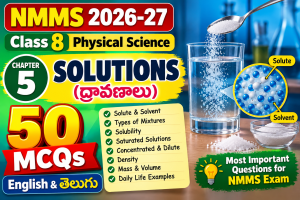
📚 NMMS Class 8 Physical Science Chapter 5 – SOLUTIONS | 50 Most Important MCQs | English & Telugu_Test-1 by admin | Nov 1, 2026 | NMMS 2026, class 8 science, Uncategorized | 0 comments 📚 NMMS Class 8 Physical Science Chapter 5 – SOLUTIONS | 50 Most Important MCQs | English & Telugu_Test-1 📚 NMMS Class 8 Physical Science Chapter 5 – SOLUTIONS | 50 Most Important MCQs | English & Telugu_Test-1 1 / 10 50. Assertion (A): A digital weighing balance should be reset to zero before measuring an object when necessary. వాదన (A): అవసరమైనప్పుడు వస్తువు ద్రవ్యరాశి కొలిచే ముందు డిజిటల్ త్రాసును సున్నాకు సెట్ చేయాలి. Reason (R): The tare or reset button brings the displayed reading to zero. కారణం (R): టేర్ లేదా రీసెట్ బటన్ ప్రదర్శిత పఠనాన్ని సున్నాకు తీసుకువస్తుంది. Both Assertion and Reason are true, and Reason correctly explains Assertion / వాదన, కారణం రెండూ నిజం; కారణం వాదనకు సరైన వివరణ Both are true, but Reason does not correctly explain Assertion / రెండూ నిజం; కానీ కారణం వాదనకు సరైన వివరణ కాదు Assertion is true, but Reason is false / వాదన నిజం; కారణం తప్పు Assertion is false, but Reason is true / వాదన తప్పు; కారణం నిజం Incorrect. Please review the explanation. / తప్పు. దయచేసి వివరణను చదవండి. Correct! / సరైన సమాధానం! Both are true. Zeroing the balance removes the initial reading, helping the displayed value represent the mass of the object placed on it. / రెండు వాక్యాలూ నిజం. త్రాసును సున్నాకు సెట్ చేయడం వల్ల ప్రారంభ పఠనం తొలగి, దానిపై ఉంచిన వస్తువు ద్రవ్యరాశిని సరైనంగా చూపుతుంది. 2 / 10 20. Which reading should be taken for water in a measuring cylinder? కొలత సిలిండర్లో నీటి పరిమాణాన్ని చదివేటప్పుడు ఏ భాగాన్ని గమనించాలి? Any point / ఏ బిందువైనా Bottom of the meniscus / మెనిస్కస్ అడుగు భాగం Top of the meniscus / మెనిస్కస్ పైభాగం Side wall / పక్క గోడ Incorrect. Please review the explanation. / తప్పు. దయచేసి వివరణను చదవండి. Correct! / సరైన సమాధానం! For water and other colourless liquids, read the mark at the bottom of the meniscus with the eye at the same level. / నీరు వంటి రంగులేని ద్రవాల విషయంలో కళ్లను అదే స్థాయిలో ఉంచి మెనిస్కస్ అడుగు భాగం వద్ద పఠనం తీసుకోవాలి. 3 / 10 9. Which gas dissolved in water supports aquatic life? నీటిలో కరిగి జలచరాల జీవనానికి తోడ్పడే వాయువు ఏది? Oxygen / ఆక్సిజన్ Helium / హీలియం Hydrogen / హైడ్రోజన్ Neon / నియాన్ Incorrect. Please review the explanation. / తప్పు. దయచేసి వివరణను చదవండి. Correct! / సరైన సమాధానం! Dissolved oxygen, though present in small amounts, sustains aquatic plants, fishes and other organisms. / తక్కువ పరిమాణంలో ఉన్నప్పటికీ నీటిలో కరిగిన ఆక్సిజన్ జలచరాలకు జీవనాధారం. 4 / 10 19. What is the approximate mass of 100 mL of water at room temperature? గది ఉష్ణోగ్రత వద్ద 100 mL నీటి ద్రవ్యరాశి సుమారుగా ఎంత? 10 g 50 g 1000 g 100 g Incorrect. Please review the explanation. / తప్పు. దయచేసి వివరణను చదవండి. Correct! / సరైన సమాధానం! The chapter states that 1 mL of water has a mass close to 1 g; hence 100 mL is approximately 100 g. / 1 mL నీటి ద్రవ్యరాశి సుమారు 1 g. కాబట్టి 100 mL నీటి ద్రవ్యరాశి సుమారు 100 g. 5 / 10 30. A block has a density of 7.9 g/cm³ and a mass of 600 g. What is its approximate volume? ఒక ఘనానికి 7.9 g/cm³ సాంద్రత, 600 g ద్రవ్యరాశి ఉన్నాయి. దాని సుమారు ఘనపరిమాణం ఎంత? 7.9 cm³ 76 cm³ 600 cm³ 4740 cm³ Incorrect. Please review the explanation. / తప్పు. దయచేసి వివరణను చదవండి. Correct! / సరైన సమాధానం! Volume = mass/density = 600/7.9 ≈ 75.95 cm³, approximately 76 cm³. / ఘనపరిమాణం = ద్రవ్యరాశి/సాంద్రత = 600/7.9 ≈ 75.95 ఘన సెం.మీ., అంటే సుమారు 76 ఘన సెం.మీ. 6 / 10 40. Which statement best explains why a saturated solution at one temperature may become unsaturated after heating? ఒక ఉష్ణోగ్రత వద్ద సంతృప్త ద్రావణం వేడి చేసిన తర్వాత అసంతృప్త ద్రావణంగా ఎందుకు మారవచ్చు? Solute changes into solvent / ద్రావితం ద్రావణిగా మారుతుంది Heating always removes the solvent / వేడి చేయడం వల్ల ద్రావణి ఎప్పుడూ తొలగిపోతుంది The solubility of most solid solutes increases with temperature / చాలా ఘన ద్రావితాల ద్రావణీయత ఉష్ణోగ్రతతో పెరుగుతుంది The solution becomes non-uniform / ద్రావణం అసమాంగంగా మారుతుంది Incorrect. Please review the explanation. / తప్పు. దయచేసి వివరణను చదవండి. Correct! / సరైన సమాధానం! When temperature rises, more of most solid solutes can dissolve. The solution can therefore dissolve additional solute. / ఉష్ణోగ్రత పెరిగినప్పుడు చాలా ఘన ద్రావితాలు మరింత కరుగుతాయి. అందువల్ల ద్రావణం మరింత ద్రావితాన్ని కరిగించగలదు. 7 / 10 10. Which instrument is used to measure the mass of an object in the activity described in the chapter? పాఠ్యభాగంలోని ప్రయోగంలో వస్తువు ద్రవ్యరాశిని కొలవడానికి ఏ పరికరాన్ని ఉపయోగించారు? Laboratory thermometer / ప్రయోగశాల ఉష్ణమాపకం Metre scale / మీటరు స్కేలు Digital weighing balance / డిజిటల్ త్రాసు Measuring cylinder / కొలత సిలిండర్ Incorrect. Please review the explanation. / తప్పు. దయచేసి వివరణను చదవండి. Correct! / సరైన సమాధానం! The chapter demonstrates measuring mass using a digital weighing balance. / డిజిటల్ త్రాసుతో ద్రవ్యరాశిని కొలిచే విధానాన్ని ఈ పాఠంలో వివరించారు. 8 / 10 29. A gas is compressed at constant mass. What happens to its density? స్థిర ద్రవ్యరాశి గల వాయువును కుదిస్తే దాని సాంద్రతకు ఏమవుతుంది? Decreases / తగ్గుతుంది Increases / పెరుగుతుంది Remains always the same / ఎల్లప్పుడూ మారదు Becomes zero / సున్నా అవుతుంది Incorrect. Please review the explanation. / తప్పు. దయచేసి వివరణను చదవండి. Correct! / సరైన సమాధానం! Compression decreases the gas volume while mass remains the same. Since density = mass/volume, density increases. / వాయువును కుదిస్తే దాని ఘనపరిమాణం తగ్గుతుంది; ద్రవ్యరాశి మారదు. కాబట్టి సాంద్రత పెరుగుతుంది. 9 / 10 39. A liquid has a mass of 910 g and a volume of 1 L. Which conclusion is supported by the chapter's example? ఒక ద్రవం ద్రవ్యరాశి 910 g, ఘనపరిమాణం 1 L. పాఠ్యభాగంలోని ఉదాహరణ ఆధారంగా ఏ నిర్ధారణ సరైనది? Its density is 9.1 g/mL / దాని సాంద్రత 9.1 g/mL Its density is about 0.91 g/mL and is less than water / దాని సాంద్రత సుమారు 0.91 g/mL; ఇది నీటికంటే తక్కువ Its density cannot be calculated / దాని సాంద్రత లెక్కించలేము Its density is 1.91 g/mL / దాని సాంద్రత 1.91 g/mL Incorrect. Please review the explanation. / తప్పు. దయచేసి వివరణను చదవండి. Correct! / సరైన సమాధానం! 1 L = 1000 mL. Density = 910/1000 = 0.91 g/mL, which is below the approximate density of water (1 g/mL). / 1 L = 1000 mL. సాంద్రత = 910/1000 = 0.91 g/mL. ఇది నీటి సుమారు సాంద్రత 1 g/mL కంటే తక్కువ. 10 / 10 45. Match the quantity with its unit. భౌతిక పరిమాణాన్ని దాని ప్రమాణంతో జతపరచండి. Column A / నిలువు వరుస A 1. Mass / ద్రవ్యరాశి 2. Volume (SI) / ఘనపరిమాణం (SI) 3. Density (SI) / సాంద్రత (SI) 4. Weight / బరువు Column B / నిలువు వరుస B a. Newton (N) / న్యూటన్ b. Kilogram (kg) / కిలోగ్రాము c. Cubic metre (m³) / ఘన మీటరు d. Kilogram per cubic metre (kg/m³) / కిలోగ్రాము ప్రతి ఘన మీటరు 1-d, 2-a, 3-b, 4-c 1-c, 2-d, 3-a, 4-b 1-a, 2-b, 3-c, 4-d 1-b, 2-c, 3-d, 4-a Incorrect. Please review the explanation. / తప్పు. దయచేసి వివరణను చదవండి. Correct! / సరైన సమాధానం! Mass is measured in kg, volume in m³, density in kg/m³ and weight as a force in newtons. / ద్రవ్యరాశి kgలో, ఘనపరిమాణం m³లో, సాంద్రత kg/m³లో, బరువు బలంగా న్యూటన్లలో కొలుస్తారు. Your score isThe average score is 0% Views: 12 Submit a Comment Cancel replyYour email address will not be published. Required fields are marked *Comment * Name * Email * Website Save my name, email, and website in this browser for the next time I comment.