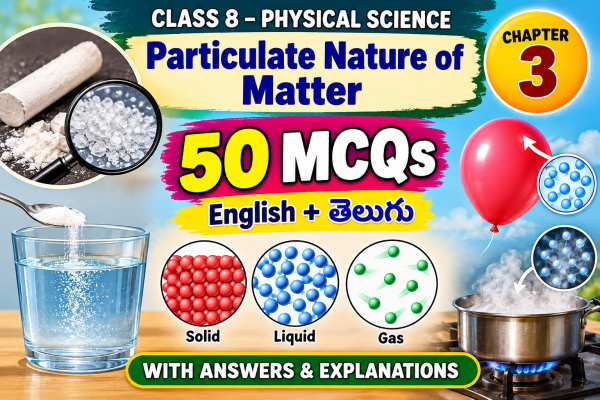
📚 Class 8 Physical Science Chapter 3 | Particulate Nature of Matter | 50 Most Important MCQs | English + Telugu_Test-1 by admin | Nov 1, 2026 | Uncategorized | 0 comments 📚 Class 8 Physical Science Chapter 3 | Particulate Nature of Matter | 50 Most Important MCQs | English + Telugu_Test-1 📚 Class 8 Physical Science Chapter 3 | Particulate Nature of Matter | 50 Most Important MCQs | English + Telugu 1 / 10 Which statement about evaporation and boiling is correct? బాష్పీభవనం, మరుగు ప్రక్రియల గురించి సరైన వాక్యం ఏది? Evaporation occurs only inside the liquid / బాష్పీభవనం ద్రవం లోపల మాత్రమే జరుగుతుంది Both occur only at the boiling point / రెండూ మరుగు స్థానం వద్ద మాత్రమే జరుగుతాయి Neither forms vapour / ఏ ప్రక్రియలోనూ ఆవిరి ఏర్పడదు Boiling occurs throughout the liquid, while evaporation occurs slowly at the surface / మరుగు ద్రవమంతటా జరుగుతుంది; బాష్పీభవనం ఉపరితలంపై నెమ్మదిగా జరుగుతుంది Incorrect. Please review the explanation. / తప్పు. దయచేసి వివరణను చదవండి. Correct! / సరైన సమాధానం! Explanation (English + Telugu): At boiling, vapour forms rapidly throughout the liquid; evaporation occurs at the surface and can occur below the boiling point. మరుగులో ద్రవమంతటా వేగంగా ఆవిరి ఏర్పడుతుంది; బాష్పీభవనం ఉపరితలంపై జరుగుతుంది, మరుగు స్థానం కంటే తక్కువ ఉష్ణోగ్రత వద్ద కూడా జరగవచ్చు. 2 / 10 Assertion: Dissolving sugar in water proves that sugar particles are destroyed. ప్రతిపాదన: చక్కెర నీటిలో కరగడం వల్ల చక్కెర కణాలు నాశనమవుతాయని నిరూపిస్తుంది. Reason: The sweet taste of the solution shows that sugar remains present even when it cannot be seen. కారణం: ద్రావణం తీపిగా ఉండటం వల్ల కనిపించకపోయినా చక్కెర అందులో ఉందని తెలుస్తుంది. Assertion is false, but Reason is true. / వాదన తప్పు, కానీ కారణం నిజం. Both Assertion and Reason are true, but Reason does not correctly explain Assertion. / వాదన, కారణం రెండూ నిజం; కానీ కారణం వాదనను సరిగ్గా వివరించదు. Both Assertion and Reason are true, and Reason correctly explains Assertion. / వాదన, కారణం రెండూ నిజం; కారణం వాదనను సరిగ్గా వివరిస్తుంది. Assertion is true, but Reason is false. / వాదన నిజం, కానీ కారణం తప్పు. Incorrect. Please review the explanation. / తప్పు. దయచేసి వివరణను చదవండి. Correct! / సరైన సమాధానం! Explanation (English + Telugu): The assertion is false because sugar is not destroyed; it remains dispersed as tiny particles. The reason is true. చక్కెర నాశనం కాదు; సూక్ష్మ కణాల రూపంలో ద్రావణంలో వ్యాపించి ఉంటుంది కాబట్టి ప్రతిపాదన తప్పు. తీపి రుచి చక్కెర ఇంకా ఉందని చూపిస్తుంది. ============================================================ END OF QUESTION PAPER Topics covered: constituent particles, interparticle spaces and attraction, solids/liquids/gases, melting, boiling, evaporation, compressibility, diffusion, thermal energy, Acharya Kanad. 3 / 10 Match the particle arrangement with the state: కణాల అమరికను పదార్థ స్థితితో జతపరచండి: 1. Closely packed, vibrate around fixed positions / దగ్గరగా అమరి స్థిర స్థానాల చుట్టూ కంపిస్తాయి 2. Particles move within a limited space / కణాలు పరిమిత పరిధిలో కదులుతాయి 3. Particles move freely in all directions / కణాలు అన్ని దిశల్లో స్వేచ్ఛగా కదులుతాయి a. Gas / వాయువు b. Solid / ఘనం c. Liquid / ద్రవం 1-b, 2-a, 3-c 1-c, 2-a, 3-b 1-a, 2-b, 3-c 1-b, 2-c, 3-a Incorrect. Please review the explanation. / తప్పు. దయచేసి వివరణను చదవండి. Correct! / సరైన సమాధానం! Explanation (English + Telugu): These are the particle-motion descriptions for solids, liquids and gases respectively. ఇవి వరుసగా ఘనాలు, ద్రవాలు, వాయువుల కణాల కదలిక లక్షణాలు. ============================================================ ASSERTION AND REASON (Questions 46–50) Choose: 4 / 10 Why does a liquid not retain a permanent shape after being poured into a new vessel? ద్రవాన్ని మరో పాత్రలో పోసిన తర్వాత అది తన పాత ఆకారాన్ని ఎందుకు నిలుపుకోదు? It has no definite volume / దానికి నిర్దిష్ట ఘనపరిమాణం ఉండదు Its particles can move around one another / దాని కణాలు ఒకదాని చుట్టూ మరొకటి కదలగలవు Its particles have no attraction whatsoever / కణాల మధ్య ఎలాంటి ఆకర్షణ ఉండదు Its particles are fixed rigidly / కణాలు గట్టిగా స్థిరంగా ఉంటాయి Incorrect. Please review the explanation. / తప్పు. దయచేసి వివరణను చదవండి. Correct! / సరైన సమాధానం! Explanation (English + Telugu): Liquid particles move within a limited space, allowing flow and a change of shape while retaining volume. ద్రవ కణాలు పరిమిత పరిధిలో కదలగలవు కాబట్టి ద్రవం ప్రవహించి ఆకారాన్ని మార్చుకుంటుంది; ఘనపరిమాణం మాత్రం నిలుస్తుంది. 5 / 10 Which process occurs slowly at the surface of a liquid and can happen below its boiling point? ద్రవ ఉపరితలంపై నెమ్మదిగా జరిగి, మరుగు స్థానం కంటే తక్కువ ఉష్ణోగ్రత వద్ద కూడా జరిగే ప్రక్రియ ఏది? Condensation only / ఘనీభవనం మాత్రమే Evaporation / బాష్పీభవనం Melting / ద్రవీభవనం Freezing / గడ్డకట్టడం Incorrect. Please review the explanation. / తప్పు. దయచేసి వివరణను చదవండి. Correct! / సరైన సమాధానం! Explanation (English + Telugu): Evaporation takes place at the surface and may occur at temperatures below the boiling point. బాష్పీభవనం ద్రవ ఉపరితలంపై జరుగుతుంది; మరుగు స్థానం కంటే తక్కువ ఉష్ణోగ్రతల వద్ద కూడా ఇది సంభవించవచ్చు. 6 / 10 Why does sand not dissolve in water in the activity described? వివరించిన ప్రయోగంలో ఇసుక నీటిలో ఎందుకు కరగదు? Water particles cannot pull sand particles apart sufficiently / ఇసుక కణాలను విడదీయడానికి నీటి కణాల ఆకర్షణ సరిపోదు Sand is a gas / ఇసుక వాయువు Water has no interparticle spaces / నీటిలో అంతరకణ ఖాళీలు లేవు Sand has no particles / ఇసుకకు కణాలు ఉండవు Incorrect. Please review the explanation. / తప్పు. దయచేసి వివరణను చదవండి. Correct! / సరైన సమాధానం! Explanation (English + Telugu): The chapter notes that in insoluble substances such as sand, particles are held together too strongly for water to pull them out. ఇసుక వంటి కరగని పదార్థాల్లో కణాలు బలంగా కలిసి ఉండటంతో నీటి కణాలు వాటిని విడదీయలేవని అధ్యాయం చెబుతుంది. ============================================================ LEVEL 3 – APPLICATION AND REASONING (Questions 21–30) ============================================================ 7 / 10 Which substance listed in the chapter has a melting point of 0°C? ఈ అధ్యాయంలో పేర్కొన్న ఏ పదార్థానికి ద్రవీభవన స్థానం 0°C? Ice / మంచు Iron / ఇనుము Urea / యూరియా Sand / ఇసుక Incorrect. Please review the explanation. / తప్పు. దయచేసి వివరణను చదవండి. Correct! / సరైన సమాధానం! Explanation (English + Telugu): The textbook table lists ice at 0°C, urea at 133°C, and iron at 1538°C. పాఠ్యపుస్తక పట్టికలో మంచు 0°C, యూరియా 133°C, ఇనుము 1538°Cగా ఇవ్వబడ్డాయి. ============================================================ LEVEL 2 – CONCEPTUAL UNDERSTANDING (Questions 11–20) ============================================================ 8 / 10 Which sequence correctly represents increasing interparticle spacing? అంతరకణ దూరం పెరుగుతున్న క్రమాన్ని ఏది సరిగ్గా సూచిస్తుంది? Gas → liquid → solid / వాయువు → ద్రవం → ఘనం Solid → liquid → gas / ఘనం → ద్రవం → వాయువు Liquid → solid → gas / ద్రవం → ఘనం → వాయువు Solid → gas → liquid / ఘనం → వాయువు → ద్రవం Incorrect. Please review the explanation. / తప్పు. దయచేసి వివరణను చదవండి. Correct! / సరైన సమాధానం! Explanation (English + Telugu): Interparticle spacing is minimum in solids, greater in liquids and maximum in gases. అంతరకణ దూరం ఘనాల్లో అతి తక్కువగా, ద్రవాల్లో ఎక్కువగా, వాయువుల్లో అత్యధికంగా ఉంటుంది. 9 / 10 Which conclusion best connects thermal energy and states of matter in the chapter? ఈ అధ్యాయంలో ఉష్ణ శక్తి మరియు పదార్థ స్థితుల మధ్య సంబంధాన్ని ఏ నిర్ధారణ ఉత్తమంగా వివరిస్తుంది? Thermal energy has no effect on particle motion / ఉష్ణ శక్తి కణాల కదలికపై ప్రభావం చూపదు Greater thermal energy can increase particle motion and help overcome attractions / అధిక ఉష్ణ శక్తి కణాల కదలికను పెంచి ఆకర్షణలను అధిగమించడంలో సహాయపడుతుంది All states have identical particle spacing / అన్ని స్థితుల్లో కణాల మధ్య దూరం ఒకేలా ఉంటుంది Only container shape determines the state / పాత్ర ఆకారమే స్థితిని నిర్ణయిస్తుంది Incorrect. Please review the explanation. / తప్పు. దయచేసి వివరణను చదవండి. Correct! / సరైన సమాధానం! Explanation (English + Telugu): The chapter summarises that thermal energy affects particle motion and the balance with attractive forces, helping determine the state of matter. ఉష్ణ శక్తి కణాల కదలికను, ఆకర్షణ బలాలతో వాటి సంబంధాన్ని ప్రభావితం చేసి పదార్థ స్థితిని నిర్ణయించడంలో సహాయపడుతుందని అధ్యాయం చెబుతుంది. ============================================================ UPSC-MODEL QUESTIONS – MULTI-STATEMENT / ANALYTICAL (Questions 31–40) ============================================================ 10 / 10 Acharya Kanad's idea mentioned in the chapter was that matter consists of tiny indivisible particles called: ఈ అధ్యాయంలో పేర్కొన్న ఆచార్య కణాదుని భావన ప్రకారం పదార్థం ఏ పేరుగల సూక్ష్మ, అవిభాజ్య కణాలతో నిర్మితమైంది? Parmanu / పరమాణు Fluids / ద్రవాలు Solutions / ద్రావణాలు SPM / తేలియాడే సూక్ష్మ కణాలు Incorrect. Please review the explanation. / తప్పు. దయచేసి వివరణను చదవండి. Correct! / సరైన సమాధానం! Explanation (English + Telugu): The chapter states that Acharya Kanad described tiny, indivisible, eternal particles called Parmanu in the Vaisheshika Sutras. వైశేషిక సూత్రాల్లో ఆచార్య కణాదుడు పరమాణు అనే సూక్ష్మ, అవిభాజ్య, శాశ్వత కణాల భావనను వివరించినట్లు అధ్యాయం పేర్కొంటుంది. ============================================================ MATCHING QUESTIONS (Questions 41–45) ============================================================ Your score isThe average score is 0% Views: 10 Submit a Comment Cancel replyYour email address will not be published. Required fields are marked *Comment * Name * Email * Website Save my name, email, and website in this browser for the next time I comment.