NMMS Class 8 Biology Chapter 1: 50 Important Questions with Answers

NMMS Class 8 Biology Chapter 1: 50 Most Important Questions | The Invisible Living World

📚 NMMS Class 8 Biology Chapter 1 | 50 Most Important Questions | The Invisible Living World

📚 NMMS Class 8 Biology Chapter 1 | 50 Most Important Questions | The Invisible Living World

1 / 50

Assertion: Plant cells are often firm in structure. / వాదన: వృక్ష కణాలు సాధారణంగా దృఢంగా ఉంటాయి.
Reason: The cell wall provides rigidity and strength to plant cells. / కారణం: కణ గోడ వృక్ష కణాలకు దృఢత్వం, బలాన్ని ఇస్తుంది.

2 / 50

Assertion: Microorganisms are found only in water. / వాదన: సూక్ష్మజీవులు నీటిలో మాత్రమే ఉంటాయి.
Reason: Microorganisms may be found in soil, air, water and inside living bodies. / కారణం: సూక్ష్మజీవులు మట్టి, గాలి, నీటిలో మరియు జీవుల శరీరాల లోపల కూడా ఉండవచ్చు.

3 / 50

Which cell part and function are correctly matched? / కణ భాగం–పని జతలో సరైనది ఏది?

4 / 50

Why is glycerin placed on an onion-peel slide? / ఉల్లిపాయ పొర స్లైడ్‌పై గ్లిసరిన్ ఎందుకు వేస్తారు?

5 / 50

Match the microorganism with its role. / సూక్ష్మజీవిని దాని పాత్రతో జతపరచండి.
Column I / నిలువు వరుస I
1. Yeast / ఈస్ట్
2. Lactobacillus / లాక్టోబాసిల్లస్
3. Rhizobium / రైజోబియం
4. Microalgae / సూక్ష్మశైవలాలు
Column II / నిలువు వరుస II
a. Helps form curd / పెరుగు ఏర్పడటానికి సహాయపడుతుంది
b. Helps make nitrogen useful to legume plants / పప్పుజాతి మొక్కలకు నత్రజని ఉపయోగపడేలా చేస్తుంది
c. Releases oxygen and can serve as aquatic food / ఆక్సిజన్ విడుదల చేసి జలచరాలకు ఆహారమవుతుంది
d. Makes dough rise / పిండిని పొంగేలా చేస్తుంది

6 / 50

Why is safranin added while preparing an onion-peel slide? / ఉల్లిపాయ పొర స్లైడ్ తయారీలో సాఫ్రానిన్ ఎందుకు వేస్తారు?

7 / 50

Which statements about bacteria are correct? / బ్యాక్టీరియా గురించి సరైన వాక్యాలు ఏవి?
1. Bacteria do not have a well-defined nucleus with a nuclear membrane. / బ్యాక్టీరియాలో కేంద్రక త్వచంతో కూడిన స్పష్టమైన కేంద్రకం ఉండదు.
2. Their genetic region is described as a nucleoid. / వాటి జన్యు పదార్థం ఉన్న ప్రాంతాన్ని న్యూక్లియాయిడ్ అంటారు.
3. All bacteria have chloroplasts. / అన్ని బ్యాక్టీరియాల్లో హరితరేణువులు ఉంటాయి.

8 / 50

What is the correct order of organisation in a complex living organism? / సంక్లిష్ట జీవిలో నిర్మాణ స్థాయుల సరైన క్రమం ఏది?

9 / 50

Which microorganism is used to make bread soft and fluffy? / బ్రెడ్‌ను మెత్తగా, పొంగేలా చేయడానికి ఏ సూక్ష్మజీవిని ఉపయోగిస్తారు?

10 / 50

Match the organism with its group. / జీవిని దాని వర్గంతో జతపరచండి.
Column I / నిలువు వరుస I
1. Amoeba / అమీబా
2. Chlamydomonas / క్లామిడోమోనాస్
3. Bread mould / బ్రెడ్ బూజు
4. Yeast / ఈస్ట్
Column II / నిలువు వరుస II
a. Unicellular fungus / ఏకకణ శిలీంధ్రం
b. Protozoa / ప్రోటోజోవా
c. Algae / శైవలాలు
d. Fungi / శిలీంధ్రాలు

11 / 50

A long cell with many branches carries messages around the body. Which cell is it? / అనేక శాఖలతో పొడవుగా ఉండి శరీరమంతా సందేశాలను తీసుకెళ్లే కణం ఏది?

12 / 50

Consider the following statements about plant cells. / వృక్ష కణాల గురించి క్రింది వాక్యాలను పరిశీలించండి.
1. The cell wall provides rigidity and strength. / కణ గోడ దృఢత్వం, బలాన్ని ఇస్తుంది.
2. Chloroplasts contain chlorophyll and help in photosynthesis. / హరితరేణువుల్లో హరిత పదార్థం ఉండి కిరణజన్య సంయోగక్రియకు సహాయపడుతుంది.
3. Vacuoles may store substances and help maintain cell shape. / రసధానులు పదార్థాలను నిల్వ చేసి కణ ఆకారాన్ని నిలబెట్టడంలో సహాయపడతాయి.

13 / 50

Which processes contribute to nutrient recycling in nature? / ప్రకృతిలో పోషకాల పునఃచక్రీకరణకు ఏ ప్రక్రియలు సహాయపడతాయి?
1. Decomposition of fallen leaves / రాలిన ఆకుల విచ్ఛిన్నం
2. Breakdown of dead animal bodies / చనిపోయిన జంతువుల శరీరాల విచ్ఛిన్నం
3. Conversion of plant waste into nutrient-rich material / మొక్కల వ్యర్థాలు పోషక పదార్థాలుగా మారడం

14 / 50

Why can growing beans help improve soil nitrogen? / బీన్స్ వంటి పప్పుజాతి పంటలు నేలలో నత్రజనిని పెంచడానికి ఎలా సహాయపడతాయి?

15 / 50

Which structure gives rigidity and strength to plant cells? / వృక్ష కణాలకు దృఢత్వం, బలాన్ని ఇచ్చే నిర్మాణం ఏది?

16 / 50

Which observation shows that cell shape is related to function? / కణ ఆకారం దాని పనికి సంబంధం ఉందని ఏ పరిశీలన తెలియజేస్తుంది?

17 / 50

If pollution reduces microalgae in a pond, what effect is most directly supported by the chapter? / కాలుష్యం వల్ల చెరువులో సూక్ష్మశైవలాలు తగ్గితే, పాఠం ప్రకారం ఏ ప్రభావం సంభవించవచ్చు?

18 / 50

Why are viruses distinguished from cellular microorganisms? / కణాలతో నిర్మితమైన సూక్ష్మజీవుల నుంచి వైరస్‌లు ఎందుకు భిన్నంగా ఉంటాయి?

19 / 50

Consider the following statements about viruses. / వైరస్‌ల గురించి క్రింది వాక్యాలను పరిశీలించండి.
1. They are microscopic. / అవి సూక్ష్మమైనవి.
2. They are acellular. / అవి కణరహితమైనవి.
3. They multiply when they enter a living cell. / జీవ కణంలోకి ప్రవేశించినప్పుడు అవి వృద్ధి చెందుతాయి.

20 / 50

Assertion: Yeast makes dough rise. / వాదన: ఈస్ట్ పిండిని పొంగేలా చేస్తుంది.
Reason: Yeast releases carbon dioxide while breaking down food, and the gas forms bubbles in the dough. / కారణం: ఆహారాన్ని విచ్ఛిన్నం చేసే సమయంలో ఈస్ట్ కార్బన్ డైఆక్సైడ్‌ను విడుదల చేస్తుంది; ఆ వాయువు పిండిలో బుడగలను ఏర్పరుస్తుంది.

21 / 50

Consider the following statements about microorganisms. / సూక్ష్మజీవుల గురించి క్రింది వాక్యాలను పరిశీలించండి.
1. They may occur in soil, water and air. / అవి మట్టి, నీరు, గాలిలో ఉండవచ్చు.
2. All microorganisms are harmful to humans. / సూక్ష్మజీవులన్నీ మనుషులకు హానికరమైనవి.
3. Some microorganisms help decompose waste. / కొన్ని సూక్ష్మజీవులు వ్యర్థాల విచ్ఛిన్నానికి సహాయపడతాయి.
Which statements are correct? / సరైన వాక్యాలు ఏవి?

22 / 50

Consider the following statements about microalgae. / సూక్ష్మశైవలాల గురించి క్రింది వాక్యాలను పరిశీలించండి.
1. They make their own food using sunlight. / సూర్యకాంతిని ఉపయోగించి ఆహారాన్ని తయారు చేసుకుంటాయి.
2. They release oxygen. / ఆక్సిజన్‌ను విడుదల చేస్తాయి.
3. They can serve as food for aquatic animals. / జలచరాలకు ఆహారంగా ఉపయోగపడతాయి.
4. They can be used in water cleaning and biofuel production. / నీటి శుద్ధి, జీవ ఇంధన తయారీలో ఉపయోగపడతాయి.

23 / 50

Why does dough with yeast rise more than dough without yeast? / ఈస్ట్ కలిపిన పిండి, ఈస్ట్ లేని పిండి కంటే ఎందుకు ఎక్కువగా పొంగుతుంది?

24 / 50

A balloon attached to warm sugar solution with yeast inflates. What is the best explanation? / ఈస్ట్ కలిపిన గోరువెచ్చని చక్కెర ద్రావణానికి అమర్చిన బెలూన్ ఉబ్బింది. సరైన వివరణ ఏది?

25 / 50

Why is curd more likely to form first in warm milk than in cold milk? / చల్లని పాలకంటే గోరువెచ్చని పాలలో పెరుగు త్వరగా ఎందుకు ఏర్పడుతుంది?

26 / 50

What is the role of Lactobacillus in curd formation? / పెరుగు తయారీలో లాక్టోబాసిల్లస్ పాత్ర ఏమిటి?

27 / 50

Which bacterium helps convert milk into curd? / పాలను పెరుగుగా మార్చడంలో సహాయపడే బాక్టీరియం ఏది?

28 / 50

A cell has a cell membrane, cytoplasm and nucleus, but no cell wall or chloroplasts. Which is the most likely example? / ఒక కణంలో కణ త్వచం, కణద్రవ్యం, కేంద్రకం ఉన్నాయి; కానీ కణ గోడ, హరితరేణువులు లేవు. అది ఏ కణం కావచ్చు?

29 / 50

What is the basic unit of life? / జీవానికి ప్రాథమిక ప్రమాణం ఏది?

30 / 50

Decomposing organic waste in an oxygen-free system produces gas rich in methane. What is a likely use? / ఆక్సిజన్ లేని వ్యవస్థలో సేంద్రియ వ్యర్థాలు కుళ్లినప్పుడు మీథేన్ అధికంగా ఉన్న వాయువు ఏర్పడుతుంది. దాని ఉపయోగం ఏమిటి?

31 / 50

Which microorganism lives in the root nodules of leguminous plants and helps make nitrogen useful to plants? / పప్పుజాతి మొక్కల వేరు బుడిపెలలో నివసించి, నత్రజని మొక్కలకు ఉపయోగపడేలా చేసే సూక్ష్మజీవి ఏది?

32 / 50

Which cell part allows useful materials to enter and wastes to leave? / ఉపయోగకర పదార్థాలు లోపలికి, వ్యర్థాలు బయటకు వెళ్లేలా చేసే కణ భాగం ఏది?

33 / 50

Consider the following pairs. / క్రింది జతలను పరిశీలించండి.
1. Yeast — bread-making / ఈస్ట్ — బ్రెడ్ తయారీ
2. Lactobacillus — curd formation / లాక్టోబాసిల్లస్ — పెరుగు తయారీ
3. Rhizobium — root nodules of legumes / రైజోబియం — పప్పుజాతి వేరు బుడిపెలు
4. Chlamydomonas — nitrogen fixation in legume roots / క్లామిడోమోనాస్ — పప్పుజాతి వేర్లలో నత్రజని స్థిరీకరణ
How many pairs are correctly matched? / ఎన్ని జతలు సరైనవి?

34 / 50

Why do fruit and vegetable peels become dark, nutrient-rich material when mixed with soil and left for weeks? / పండ్లు, కూరగాయల తొక్కలను మట్టిలో కలిపి కొన్ని వారాలు ఉంచితే పోషకాలు గల ముదురు పదార్థంగా ఎందుకు మారతాయి?

35 / 50

Which of the following is a unicellular organism mentioned in the chapter? / ఈ పాఠంలో పేర్కొన్న ఏకకణ జీవి ఏది?

36 / 50

Plant waste decomposes slowly when the material is too dry. What can be inferred? / మొక్కల వ్యర్థాలు మరీ పొడిగా ఉన్నప్పుడు నెమ్మదిగా కుళ్లుతున్నాయి. దీనినుంచి ఏమి అర్థం చేసుకోవచ్చు?

37 / 50

Assertion: Rhizobium can help improve soil nitrogen for legume crops. / వాదన: రైజోబియం పప్పుజాతి పంటలకు నేలలో నత్రజని అందుబాటును మెరుగుపరచగలదు.
Reason: Rhizobium lives in root nodules of certain legumes and helps make nitrogen from the air useful to plants. / కారణం: రైజోబియం కొన్ని పప్పుజాతి మొక్కల వేరు బుడిపెలలో నివసించి, గాలిలోని నత్రజని మొక్కలకు ఉపయోగపడేలా చేస్తుంది.

38 / 50

What is the correct sequence of biological organisation? / జీవ నిర్మాణ స్థాయుల సరైన క్రమం ఏది?

39 / 50

Consider the following statements about cells. / కణాల గురించి క్రింది వాక్యాలను పరిశీలించండి.
1. The cell is the basic unit of life. / కణం జీవానికి ప్రాథమిక ప్రమాణం.
2. All cells have exactly the same shape and size. / అన్ని కణాల ఆకారం, పరిమాణం ఒకేలా ఉంటాయి.
3. Cell shape can be related to its function. / కణ ఆకారం దాని పనికి సంబంధించి ఉంటుంది.
Which statements are correct? / సరైన వాక్యాలు ఏవి?

40 / 50

A bacterial cell has no well-defined nucleus surrounded by a nuclear membrane. What is its genetic region called? / బ్యాక్టీరియా కణంలో కేంద్రక త్వచంతో ఆవరించబడిన స్పష్టమైన కేంద్రకం లేదు. దాని జన్యు పదార్థం ఉన్న ప్రాంతాన్ని ఏమంటారు?

41 / 50

Match the cell part with its function. / కణ భాగాన్ని దాని పనితో జతపరచండి.
Column I / నిలువు వరుస I
1. Cell membrane / కణ త్వచం
2. Nucleus / కేంద్రకం
3. Cell wall / కణ గోడ
4. Chloroplast / హరితరేణువు
Column II / నిలువు వరుస II
a. Helps in photosynthesis / కిరణజన్య సంయోగక్రియకు సహాయపడుతుంది
b. Regulates cell activities / కణ కార్యకలాపాలను నియంత్రిస్తుంది
c. Controls entry of useful materials and exit of waste / ఉపయోగకర పదార్థాల ప్రవేశం, వ్యర్థాల నిష్క్రమణను నియంత్రిస్తుంది
d. Gives rigidity and strength to plant cells / వృక్ష కణాలకు దృఢత్వం, బలాన్ని ఇస్తుంది

42 / 50

Which scientist published the book Micrographia in 1665? / 1665లో Micrographia అనే పుస్తకాన్ని ప్రచురించిన శాస్త్రవేత్త ఎవరు?

43 / 50

Which instrument helps us observe microorganisms? / సూక్ష్మజీవులను పరిశీలించడానికి ఏ పరికరం ఉపయోగపడుతుంది?

44 / 50

Which cell part regulates the activities of a typical cell? / సాధారణ కణంలోని కార్యకలాపాలను నియంత్రించే భాగం ఏది?

45 / 50

Which experiment best tests whether yeast causes dough to rise? / ఈస్ట్ వల్ల పిండి పొంగుతుందో లేదో పరీక్షించడానికి సరైన ప్రయోగం ఏది?

46 / 50

Assertion: Viruses reproduce independently outside living cells. / వాదన: వైరస్‌లు జీవ కణాల వెలుపల స్వతంత్రంగా పునరుత్పత్తి చెందుతాయి.
Reason: Viruses are acellular and multiply when they enter a living cell. / కారణం: వైరస్‌లు కణరహితమైనవి; జీవ కణంలోకి ప్రవేశించినప్పుడు వృద్ధి చెందుతాయి.

47 / 50

A slide shows closely packed, nearly rectangular cells from an onion peel. What is the best conclusion? / ఉల్లిపాయ పొర స్లైడ్‌లో దగ్గరగా అమర్చబడిన దాదాపు దీర్ఘచతురస్రాకార కణాలు కనిపిస్తే సరైన నిర్ధారణ ఏది?

48 / 50

A microorganism is green, single-celled and moves with specialised structures. Which is it? / ఒక సూక్ష్మజీవి ఆకుపచ్చగా, ఏకకణంగా ఉండి ప్రత్యేక నిర్మాణాల సహాయంతో కదులుతుంది. అది ఏది?

49 / 50

Match the activity or material with its purpose. / పదార్థం లేదా నమూనా తయారీ దశను దాని ప్రయోజనంతో జతపరచండి.
Column I / నిలువు వరుస I
1. Safranin / సాఫ్రానిన్
2. Methylene blue / మిథిలీన్ బ్లూ
3. Glycerin / గ్లిసరిన్
4. Soil suspension / మట్టి సస్పెన్షన్
Column II / నిలువు వరుస II
a. Helps observe tiny organisms from soil / మట్టిలోని సూక్ష్మజీవులను పరిశీలించడానికి సహాయపడుతుంది
b. Prevents a specimen from drying and improves clarity / నమూనా ఎండిపోకుండా చేసి స్పష్టత పెంచుతుంది
c. Stains onion-peel cells pinkish / ఉల్లిపాయ కణాలకు గులాబీ రంగు ఇస్తుంది
d. Improves contrast when observing cheek cells / చెంప కణాలను స్పష్టంగా చూడటానికి వ్యత్యాసాన్ని పెంచుతుంది

50 / 50

Match the scientist with the contribution. / శాస్త్రవేత్తను ఆయన చేసిన కృషితో జతపరచండి.
Column I / నిలువు వరుస I
1. Robert Hooke / రాబర్ట్ హుక్
2. Antonie van Leeuwenhoek / ఆంటోనీ వాన్ లీవెన్‌హుక్
3. Ananda Mohan Chakrabarty / ఆనంద మోహన్ చక్రవర్తి
4. Robert Hooke’s book / రాబర్ట్ హుక్ పుస్తకం
Column II / నిలువు వరుస II
a. Micrographia / మైక్రోగ్రాఫియా
b. Developed a bacterium that could break down oil spills / చమురు చిందులను విచ్ఛిన్నం చేసే బ్యాక్టీరియాను అభివృద్ధి చేశారు
c. Observed tiny living things using improved lenses / మెరుగైన లెన్స్‌లతో సూక్ష్మజీవులను పరిశీలించారు
d. Used the term “cell” for compartments in cork / కార్క్‌లోని భాగాలకు “కణం” అనే పదాన్ని ఉపయోగించారు

Your score is

The average score is 29%

Are you preparing for the NMMS Scholarship Examination 2026–27?
Welcome to NMMS.co.in, your learning destination for NMMS study
material, Science MCQs, MAT and SAT practice questions, and scholarship exam preparation.

In this article, we focus on Class 8 Biology Chapter 1 – The Invisible
Living World
. Practise 50 important multiple-choice questions (MCQs)
to strengthen your understanding of microscopic organisms, microorganisms,
and other important concepts covered in your prescribed textbook.

📚 Chapter Overview

  • Exam: NMMS Scholarship Examination
  • Class: 8
  • Subject: Biology / Science
  • Chapter: The Invisible Living World
  • Practice Material: 50 Important MCQs
  • Question Types: Conceptual, application-based and higher-order questions
  • Website: NMMS.co.in

Why Is This Chapter Important for NMMS?

Science is an important component of the Scholastic Aptitude Test (SAT)
in the NMMS examination. Understanding basic biological concepts helps
students answer factual, conceptual and application-based questions.
The chapter The Invisible Living World introduces students to
living organisms and microscopic life that cannot usually be seen with
the naked eye.

These practice questions are designed to support revision, improve
conceptual understanding and help students prepare systematically.
Always compare the questions with your prescribed state textbook and
the latest NMMS examination syllabus.

What Will You Learn?

  • Basic concepts related to the invisible living world
  • Introduction to microorganisms and microscopic life
  • Important biological terms and definitions
  • Concept-based and application-oriented Science questions
  • NMMS SAT preparation and exam revision techniques

50 Most Important Biology MCQs for NMMS Class 8

Test your preparation with the 50-question practice set for
Biology Chapter 1 – The Invisible Living World.
Read each question carefully, select the correct option and review
the explanation to understand the concept.

📝 Practice Instructions

  1. Attempt all 50 questions independently.
  2. Choose the most appropriate answer for each question.
  3. Check the answer key and explanations after attempting the questions.
  4. Revise the concepts for every incorrect answer.

Start the NMMS Biology Practice Test

Use the practice material below to revise the chapter and evaluate
your understanding.

Note: Replace the sample link above with the actual URL of your
published online quiz. If your questions are available as an Excel
or PDF file, add a download link instead.

Preparation Tips for NMMS Science

  • Read every Biology chapter from your prescribed textbook.
  • Make short notes of important definitions and concepts.
  • Practise MCQs regularly and analyse incorrect answers.
  • Attempt chapter-wise tests before taking full-length SAT mock tests.
  • Revise Science along with Mathematics and other SAT subjects.
  • Practise MAT questions separately to improve logical reasoning skills.

NMMS Class 8 Biology – Frequently Asked Questions

1. What is The Invisible Living World?

It is the chapter title used for this Class 8 Biology practice resource.
Study the prescribed textbook to understand the specific organisms,
concepts and terminology included in your syllabus.

2. How many questions are included in this practice set?

This resource is designed around 50 important multiple-choice questions
for chapter-wise revision and practice.

3. Are these questions useful for NMMS SAT preparation?

Yes. Chapter-wise Science MCQs can help strengthen conceptual understanding
and revision. They are practice questions, not guaranteed questions from
the official examination.

4. How should I prepare Biology for NMMS?

Study your textbook, revise important concepts, practise MCQs, understand
the explanations and take regular SAT mock tests.

5. Where can I find more NMMS study material?

Visit NMMS.co.in for additional
NMMS preparation resources, practice tests and study material as they
become available.

Conclusion

Regular practice is an important part of successful NMMS preparation.
Use these 50 important Biology MCQs to revise
Class 8 Biology Chapter 1 – The Invisible Living World,
improve your understanding and prepare for the Science portion of SAT.

Keep practising, revise consistently and explore more learning resources
at NMMS.co.in.
Share this resource with classmates who are preparing for the NMMS
Scholarship Examination.


Disclaimer: This is an independent educational practice
resource. It is not an official NMMS publication. Students should refer
to the latest official notification, prescribed textbook and examination
guidelines applicable to their state.

NMMS Class 8 Biology Chapter 1, The Invisible Living World MCQs, NMMS Biology important questions, Class 8 Biology questions and answers, NMMS SAT Science practice test, NMMS 2026-27 preparation, NMMS online mock test, Class 8 Science MCQs English Telugu, NMMS scholarship exam study material, Biology chapter-wise test for NMMS
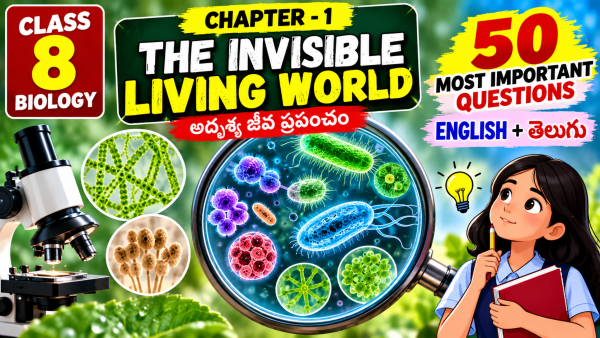
NMMS Class 8 Biology Chapter 1, The Invisible Living World MCQs, NMMS Biology important questions, Class 8 Biology questions and answers, NMMS SAT Science practice test, NMMS 2026-27 preparation, NMMS online mock test, Class 8 Science MCQs English Telugu, NMMS scholarship exam study material, Biology chapter-wise test for NMMS

Class 8 Biology Chapter 1 – The Invisible Living World,

Leave a Comment

Your email address will not be published. Required fields are marked *

Scroll to Top