📚 NMMS Class 8 Biology Chapter 2 | 50 Most Important Questions | Health

📚 NMMS Class 8 Biology Chapter 2 | 50 Most Important Questions | Health

Are you preparing for the NMMS Class 8 Scholarship Examination 2026–27? Practising important Biology questions is an effective way to strengthen your Science preparation and improve your performance in the Scholastic Aptitude Test (SAT).

📚 NMMS Class 8 Biology Chapter 2 | 50 Most Important Questions | Health

📚 NMMS Class 8 Biology Chapter 2 | 50 Most Important Questions | Health

1 / 50

Assertion (A): Health is more than the absence of disease.
ప్రతిపాదన (A): ఆరోగ్యం అంటే వ్యాధి లేకపోవడం మాత్రమే కాదు.
Reason (R): Health includes physical, mental and social well-being.
కారణం (R): ఆరోగ్యంలో శారీరక, మానసిక, సామాజిక శ్రేయస్సు ఉంటాయి.

2 / 50

Which insect is identified as a vector in the chapter?
అధ్యాయంలో వ్యాధి వాహకంగా పేర్కొన్నది ఏది?

3 / 50

A person wants to reduce mosquito-borne diseases around the home. Which action is most appropriate?
ఇంటి పరిసరాల్లో దోమల ద్వారా వ్యాపించే వ్యాధులను తగ్గించేందుకు సరైన చర్య ఏది?

4 / 50

Which sequence best represents the scientific process described for Edward Jenner’s smallpox-vaccine work?
మశూచి టీకా అభివృద్ధిలో ఎడ్వర్డ్ జెన్నర్ చేసిన శాస్త్రీయ ప్రక్రియను సరైన క్రమంలో చూపేది ఏది?

5 / 50

Consider the following pairs:
క్రింది జతలను పరిశీలించండి:
1. Malaria — Protozoa / మలేరియా — ప్రోటోజోవా
2. Dengue — Virus / డెంగ్యూ — వైరస్
3. Tuberculosis — Bacteria / క్షయవ్యాధి — బ్యాక్టీరియా
Which of the pairs are correctly matched according to the chapter?
అధ్యాయం ప్రకారం సరైన జతలు ఏవి?

6 / 50

Which of the following are non-communicable diseases?
క్రింది వాటిలో అంటువ్యాధులు కానివి ఏవి?
1. Diabetes / మధుమేహం
2. Asthma / ఆస్తమా
3. Typhoid / టైఫాయిడ్
4. Cancer / క్యాన్సర్
Select the correct answer:
సరైన సమాధానాన్ని ఎంచుకోండి:

7 / 50

A community observes more dengue cases during months with increased mosquito breeding. Which combined strategy best matches the chapter?
దోమల పెరుగుదల ఎక్కువగా ఉన్న నెలల్లో డెంగ్యూ కేసులు పెరిగినట్లు ఒక సమాజం గమనించింది. అధ్యాయానికి సరిపోయే సమగ్ర చర్య ఏది?

8 / 50

What does a vaccine help the body develop?
టీకా శరీరంలో దేనిని అభివృద్ధి చేయడంలో సహాయపడుతుంది?

9 / 50

A doctor prescribes an antibiotic for a bacterial infection. Why should the patient follow the prescribed dose and duration?
బ్యాక్టీరియా సంక్రమణకు వైద్యుడు యాంటీబయాటిక్ ఇచ్చాడు. సూచించిన మోతాదు, కాలవ్యవధిని పాటించాల్సిన కారణం ఏమిటి?

10 / 50

Match each preventive measure with the relevant disease or route.
ప్రతి నివారణ చర్యను సంబంధిత వ్యాధి లేదా వ్యాప్తి మార్గంతో జతపరచండి.
1. Mosquito nets / దోమతెరలు — a. Respiratory infections / శ్వాసకోశ సంక్రమణలు
2. Safe boiled water / సురక్షితంగా మరిగించిన నీరు — b. Mosquito-transmitted diseases / దోమల ద్వారా వ్యాపించే వ్యాధులు
3. Cover mouth while coughing / దగ్గేటప్పుడు నోరు కప్పుకోవడం — c. Diseases spread through contaminated water / కలుషిత నీటి ద్వారా వ్యాపించే వ్యాధులు
4. Avoid sharing personal items / వ్యక్తిగత వస్తువులు పంచుకోకపోవడం — d. Contact-related transmission / సంపర్కం ద్వారా వ్యాప్తి

11 / 50

Which of the following is a healthy habit?
క్రింది వాటిలో ఆరోగ్యకరమైన అలవాటు ఏది?

12 / 50

A person takes antibiotics for a viral cold without a prescription. Which conclusion best follows from the chapter?
వైరస్ వల్ల వచ్చిన జలుబుకు ఒకరు వైద్యుడి సూచన లేకుండా యాంటీబయాటిక్స్ వాడారు. అధ్యాయం ప్రకారం సరైన నిర్ధారణ ఏది?

13 / 50

Match the disease with the main site of infection given in the chapter.
వ్యాధిని అధ్యాయంలో పేర్కొన్న ప్రధాన సంక్రమణ స్థలంతో జతపరచండి.
1. Tuberculosis / క్షయవ్యాధి — a. Liver / కాలేయం
2. Hepatitis A / హెపటైటిస్ A — b. Lungs / ఊపిరితిత్తులు
3. Cholera / కలరా — c. Intestine / పేగులు
4. Ascariasis / అస్కేరియాసిస్ — d. Intestine / పేగులు

14 / 50

Consider the following statements about health:
ఆరోగ్యం గురించి క్రింది వాక్యాలను పరిశీలించండి:
1. Health includes physical, mental and social well-being. / ఆరోగ్యంలో శారీరక, మానసిక, సామాజిక శ్రేయస్సు ఉంటాయి.
2. Absence of disease alone fully defines health. / వ్యాధి లేకపోవడమే ఆరోగ్యానికి పూర్తి నిర్వచనం.
Which of the statements given above is/are correct?
పై వాక్యాలలో సరైనవి ఏవి?

15 / 50

According to the WHO definition given in the chapter, health includes:
అధ్యాయంలో ఇచ్చిన WHO నిర్వచనం ప్రకారం ఆరోగ్యంలో ఇవి ఉంటాయి:

16 / 50

A student has headaches, loses weight and cannot sleep after feeling lonely at a new school. What does this situation best show?
కొత్త పాఠశాలలో ఒంటరితనం వల్ల తలనొప్పి, బరువు తగ్గడం, నిద్రలేమి ఉన్న విద్యార్థి పరిస్థితి దేనిని సూచిస్తుంది?

17 / 50

Which statements about chronic diseases are correct according to the chapter?
దీర్ఘకాలిక వ్యాధుల గురించి అధ్యాయం ప్రకారం సరైన వాక్యాలు ఏవి?
1. They may continue for more than three months. / అవి మూడు నెలలకంటే ఎక్కువ కాలం కొనసాగవచ్చు.
2. Cancer, diabetes and asthma may be chronic. / క్యాన్సర్, మధుమేహం, ఆస్తమా దీర్ఘకాలికంగా ఉండవచ్చు.

18 / 50

Why is vaccination considered preventive rather than curative?
టీకాను చికిత్స కంటే నివారణ చర్యగా ఎందుకు పరిగణిస్తారు?

19 / 50

Consider the following statements about antibiotics:
యాంటీబయాటిక్స్ గురించి క్రింది వాక్యాలను పరిశీలించండి:
1. They act against bacterial infections. / అవి బ్యాక్టీరియా సంక్రమణలపై పనిచేస్తాయి.
2. They are effective against all viral diseases. / అవి అన్ని వైరల్ వ్యాధులపై పనిచేస్తాయి.
3. Indiscriminate use can contribute to antibiotic resistance. / విచక్షణారహిత వాడకం యాంటీబయాటిక్ నిరోధకతకు దోహదపడవచ్చు.
Which statements are correct?
సరైన వాక్యాలు ఏవి?

20 / 50

Match the term with its meaning.
పదాన్ని దాని అర్థంతో జతపరచండి.
1. Pathogen / వ్యాధికారకం — a. Organism that transmits a pathogen / వ్యాధికారకాన్ని వ్యాప్తి చేసే జీవి
2. Vector / వాహకం — b. Natural ability to fight diseases / వ్యాధులతో పోరాడే సహజ సామర్థ్యం
3. Immunity / రోగనిరోధక శక్తి — c. Disease-causing organism / వ్యాధిని కలిగించే జీవి
4. Symptom / లక్షణం — d. What a person feels / వ్యక్తి అనుభవించేది

21 / 50

Assertion (A): Antibiotics are effective against viral infections such as the common cold.
ప్రతిపాదన (A): సాధారణ జలుబు వంటి వైరల్ సంక్రమణలపై యాంటీబయాటిక్స్ పనిచేస్తాయి.
Reason (R): Antibiotics target bacterial cells and do not work against viruses.
కారణం (R): యాంటీబయాటిక్స్ బ్యాక్టీరియా కణాలపై పనిచేస్తాయి; వైరస్‌లపై పనిచేయవు.

22 / 50

Assertion (A): Vaccines are useful only after a person becomes ill.
ప్రతిపాదన (A): వ్యక్తి అనారోగ్యానికి గురైన తర్వాత మాత్రమే టీకాలు ఉపయోగపడతాయి.
Reason (R): Vaccines help train the immune system to recognise and fight particular pathogens.
కారణం (R): నిర్దిష్ట వ్యాధికారకాలను గుర్తించి ఎదుర్కొనేలా టీకాలు రోగనిరోధక వ్యవస్థకు శిక్షణ ఇస్తాయి.

23 / 50

Which statement best distinguishes a vaccine from an antibiotic?
టీకా మరియు యాంటీబయాటిక్ మధ్య సరైన తేడా ఏది?

24 / 50

Who discovered the first vaccine for smallpox, as described in the chapter?
అధ్యాయంలో వివరించిన ప్రకారం మశూచి వ్యాధికి తొలి టీకాను కనుగొన్నది ఎవరు?

25 / 50

A person lives in a polluted area and often coughs or has breathing difficulty. Which chapter idea best explains this?
కాలుష్యం ఉన్న ప్రాంతంలో నివసించే వ్యక్తికి తరచూ దగ్గు లేదా శ్వాస ఇబ్బంది కలుగుతోంది. దీనిని ఏ భావన వివరిస్తుంది?

26 / 50

Which disease is non-communicable according to the chapter?
అధ్యాయం ప్రకారం అంటువ్యాధి కానిది ఏది?

27 / 50

A village has many cases of diarrhoea. The investigation finds unsafe drinking water and poor sanitation. Which response addresses the likely cause most directly?
ఒక గ్రామంలో విరేచనాల కేసులు ఎక్కువగా ఉన్నాయి. తాగునీరు సురక్షితం కాకపోవడం, పారిశుధ్యం లోపించడం కారణాలుగా గుర్తించారు. ప్రధాన కారణాన్ని నేరుగా పరిష్కరించే చర్య ఏది?

28 / 50

Which pair contains diseases spread through contaminated food or water in the chapter?
అధ్యాయంలో కలుషిత ఆహారం లేదా నీటి ద్వారా వ్యాపించే వ్యాధుల జత ఏది?

29 / 50

Disease-causing organisms are called:
వ్యాధులను కలిగించే జీవులను ఏమంటారు?

30 / 50

With reference to vaccines, consider the following statements:
టీకాల గురించి క్రింది వాక్యాలను పరిశీలించండి:
1. Vaccines train the immune system to recognise harmful germs. / హానికరమైన సూక్ష్మజీవులను గుర్తించేలా టీకాలు రోగనిరోధక వ్యవస్థకు శిక్షణ ఇస్తాయి.
2. Vaccines are preventive and do not serve as a general cure for an illness already present. / టీకాలు నివారణకు ఉపయోగపడతాయి; ఇప్పటికే వచ్చిన వ్యాధికి సాధారణ చికిత్స కావు.
3. Vaccination can help protect people around the vaccinated person. / టీకా వేయించుకున్న వ్యక్తి చుట్టూ ఉన్నవారిని కూడా రక్షించడంలో సహాయపడుతుంది.
Which statements are correct?
సరైన వాక్యాలు ఏవి?

31 / 50

Match the scientist with the contribution described in the chapter.
శాస్త్రవేత్తను అధ్యాయంలో పేర్కొన్న కృషితో జతపరచండి.
1. Edward Jenner / ఎడ్వర్డ్ జెన్నర్ — a. Penicillin / పెనిసిలిన్
2. Alexander Fleming / అలెగ్జాండర్ ఫ్లెమింగ్ — b. Smallpox vaccine / మశూచి టీకా
3. Dr. Maharaj Kishan Bhan / డా. మహారాజ్ కిషన్ భాన్ — c. Rotavirus vaccine promotion/development contribution / రోటావైరస్ టీకా అభివృద్ధికి కృషి
4. Dr. Kamal Ranadive / డా. కమల్ రణదివే — d. Research on hormones, viruses and cancer / హార్మోన్లు, వైరస్‌లు, క్యాన్సర్‌పై పరిశోధన

32 / 50

Which is an example of a sign of illness?
వ్యాధి ఉన్నట్లు సూచించే గుర్తు ఏది?

33 / 50

Which statement best reflects the chapter’s approach to non-communicable disease control?
అంటువ్యాధులు కాని వ్యాధుల నియంత్రణపై అధ్యాయం దృక్పథాన్ని తెలిపే సరైన వాక్యం ఏది?

34 / 50

Antibiotics work against:
యాంటీబయాటిక్స్ ఏవాటిపై పనిచేస్తాయి?

35 / 50

Why can antibiotic resistance make bacterial infections harder to treat?
యాంటీబయాటిక్ నిరోధకత వల్ల బ్యాక్టీరియా సంక్రమణలకు చికిత్స ఎందుకు కష్టమవుతుంది?

36 / 50

A student has frequent thirst, frequent urination, weight loss and tiredness. Which disease listed in the chapter is suggested by this set of symptoms?
ఒక విద్యార్థికి తరచుగా దాహం, మూత్రవిసర్జన, బరువు తగ్గడం, అలసట ఉన్నాయి. అధ్యాయంలోని ఏ వ్యాధిని ఈ లక్షణాలు సూచిస్తాయి?

37 / 50

A symptom is:
లక్షణం (Symptom) అంటే:

38 / 50

Which statement about non-communicable diseases is correct?
అంటువ్యాధులు కాని వ్యాధుల గురించి సరైన వాక్యం ఏది?

39 / 50

Assertion (A): Antibiotics should be used only when prescribed by a doctor.
ప్రతిపాదన (A): యాంటీబయాటిక్స్‌ను వైద్యుడు సూచించినప్పుడే వాడాలి.
Reason (R): Unnecessary use can contribute to antibiotic resistance.
కారణం (R): అవసరం లేని వాడకం యాంటీబయాటిక్ నిరోధకతకు దోహదపడవచ్చు.

40 / 50

Which plan best addresses both communicable and non-communicable diseases in a school?
పాఠశాలలో అంటువ్యాధులు మరియు అంటువ్యాధులు కాని వ్యాధులను రెండింటినీ ఎదుర్కొనే ఉత్తమ ప్రణాళిక ఏది?

41 / 50

Which action is best when a classmate has flu-like symptoms?
సహవిద్యార్థికి ఫ్లూ వంటి లక్షణాలు ఉంటే ఉత్తమ చర్య ఏది?

42 / 50

Several people develop diarrhoea after drinking contaminated water. Which preventive step is most relevant?
కలుషిత నీరు తాగిన తర్వాత పలువురికి విరేచనాలు వచ్చాయి. అత్యంత సంబంధిత నివారణ చర్య ఏది?

43 / 50

In a school, students frequently eat junk food, skip breakfast and do little exercise. Which health risk is most consistent with the chapter?
ఒక పాఠశాలలో విద్యార్థులు తరచుగా జంక్ ఫుడ్ తింటూ, అల్పాహారం మానేసి, వ్యాయామం తక్కువగా చేస్తున్నారు. అధ్యాయంతో అత్యంత సరిపోయే ఆరోగ్య ప్రమాదం ఏది?

44 / 50

Match the disease with its causal agent.
వ్యాధిని దాని కారణ కారకంతో జతపరచండి.
Column I / కాలమ్ I Column II / కాలమ్ II
1. Malaria / మలేరియా a. Virus / వైరస్
2. Dengue / డెంగ్యూ b. Bacteria / బ్యాక్టీరియా
3. Typhoid / టైఫాయిడ్ c. Protozoa / ప్రోటోజోవా
4. Chickenpox / ఆటలమ్మ d. Virus / వైరస్
Choose the best option:
సరైన ఎంపిక:

45 / 50

A person feels pain, while a doctor measures a high body temperature. Which statement is correct?
ఒక వ్యక్తికి నొప్పి అనిపిస్తుంది; వైద్యుడు అధిక శరీర ఉష్ణోగ్రతను కొలుస్తాడు. సరైన వాక్యం ఏది?

46 / 50

Consider the following disease-prevention measures:
వ్యాధి నివారణ చర్యలను పరిశీలించండి:
1. Washing hands with soap / సబ్బుతో చేతులు కడగడం
2. Covering mouth and nose while coughing / దగ్గేటప్పుడు నోరు, ముక్కు కప్పుకోవడం
3. Sharing personal towels / వ్యక్తిగత తువ్వాళ్లు పంచుకోవడం
4. Keeping food and water clean / ఆహారం, నీటిని శుభ్రంగా ఉంచడం
Which are recommended in the chapter?
అధ్యాయంలో సూచించిన చర్యలు ఏవి?

47 / 50

Regarding the discovery of penicillin, consider the following statements:
పెనిసిలిన్ ఆవిష్కరణ గురించి క్రింది వాక్యాలను పరిశీలించండి:
1. Alexander Fleming discovered it in 1928. / అలెగ్జాండర్ ఫ్లెమింగ్ 1928లో దీనిని కనుగొన్నారు.
2. He observed that mould stopped bacteria from growing. / బూజు బ్యాక్టీరియా పెరుగుదలను ఆపినట్లు ఆయన గమనించారు.

48 / 50

Which combination best supports a healthy lifestyle?
ఆరోగ్యకరమైన జీవనశైలికి అత్యుత్తమ కలయిక ఏది?

49 / 50

Assertion (A): Dengue can be prevented partly by controlling mosquito breeding.
ప్రతిపాదన (A): దోమల వృద్ధిని నియంత్రించడం ద్వారా డెంగ్యూను కొంతవరకు నివారించవచ్చు.
Reason (R): The chapter identifies mosquitoes as vectors for diseases such as dengue.
కారణం (R): డెంగ్యూ వంటి వ్యాధులను వ్యాప్తి చేసే వాహకాలుగా దోమలను అధ్యాయం గుర్తిస్తుంది.

50 / 50

Which of the following pairs are correctly matched?
క్రింది జతల్లో సరైనవి ఏవి?
1. Cholera — Contaminated food/water / కలరా — కలుషిత ఆహారం/నీరు
2. Dengue — Mosquito transmission / డెంగ్యూ — దోమల ద్వారా వ్యాప్తి
3. Common cold — Virus / సాధారణ జలుబు — వైరస్

Your score is

The average score is 0%

On nmms.co.in, students can practise chapter-wise MCQs, revise important Science concepts, and prepare for the NMMS examination with confidence.

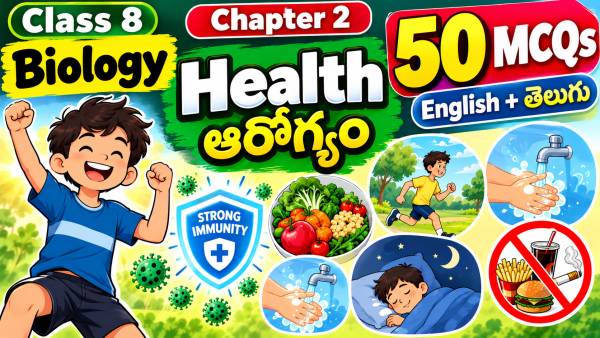
In this article, we present NMMS Class 8 Biology Chapter 2 – Health: 50 Most Important Questions, designed to help students revise key concepts related to health, diseases, disease prevention, hygiene, nutrition, and healthy living.

NMMS Class 8 Biology Chapter 2 – Health: Overview

Health is an important topic in Class 8 Science. It helps students understand how the human body stays healthy, why diseases occur, and how we can prevent illnesses through proper hygiene and healthy habits.

The 50 important questions available with this chapter-wise practice material are useful for students preparing for NMMS, school examinations, and other competitive scholarship tests.

Study Material Details:

  • Website: nmms.co.in
  • Class: 8th Standard
  • Subject: Biology / Science
  • Chapter: 2 – Health
  • Practice Questions: 50 Important MCQs
  • Question Format: Multiple Choice Questions (MCQs)
  • Medium: English and Telugu
  • Useful For: NMMS SAT, Class 8 Science revision, and scholarship exam practice

Note: Chapter numbering and terminology may differ between state textbooks. Students should refer to their prescribed textbook when revising.

Before attempting the NMMS Biology practice test, students should revise the following concepts.

1. Meaning and Importance of Health

Health involves physical, mental, and social well-being. Maintaining good health requires balanced nutrition, sufficient sleep, regular physical activity, personal hygiene, and a clean environment.

Students should understand the difference between being free from disease and maintaining overall well-being.

2. Personal Hygiene and Healthy Lifestyle

Personal hygiene plays an important role in preventing infections. Washing hands with soap, drinking safe water, eating nutritious food, maintaining cleanliness, and exercising regularly help people stay healthy.

Important questions may focus on the benefits of hygiene, balanced diets, exercise, and proper rest.

3. Communicable Diseases

Communicable diseases can spread from an infected person or another source to a susceptible person through different routes.

Examples include tuberculosis, influenza, dengue, and cholera. Students should understand the causes, modes of transmission, common symptoms, and preventive measures associated with these diseases.

4. Non-Communicable Diseases

Non-communicable diseases do not spread directly from person to person. They may be associated with genetic factors, lifestyle, environmental influences, or other causes.

Examples include diabetes and certain cardiovascular diseases. Students should revise the differences between communicable and non-communicable diseases.

5. Prevention and Control of Diseases

Disease prevention includes vaccination where recommended, proper sanitation, safe drinking water, nutritious food, vector control, and timely medical care.

Students should also understand why medicines must be used responsibly and why medical advice is important when symptoms persist.

NMMS Class 8 Biology Chapter 2 – 50 Most Important Questions

Practising MCQs helps students recall facts, identify important concepts, and improve their accuracy during examinations.

The 50-question practice set is organised into different difficulty levels to support gradual learning.

  • Level 1 – 10 Questions: Basic definitions, health concepts, hygiene, and introductory facts.
  • Level 2 – 10 Questions: Understanding diseases, causes, symptoms, and prevention.
  • Level 3 – 10 Questions: Application-based questions and conceptual understanding.
  • Competitive Exam Model – 10 Questions: Higher-order MCQs designed to develop analytical thinking.
  • Matching Questions – 5 Questions: Connecting diseases, causes, symptoms, and preventive measures.
  • Assertion and Reason – 5 Questions: Evaluating statements and understanding scientific relationships.

The questions include English and Telugu content to support bilingual learning. Answer keys and explanations help students understand the correct answers and revise the concepts more effectively.

Why Practise NMMS Biology MCQs on nmms.co.in?

The NMMS examination requires students to prepare systematically for both the Mental Ability Test (MAT) and the Scholastic Aptitude Test (SAT). Science practice is an important part of SAT preparation.

Using chapter-wise questions offers several benefits:

  • Conceptual clarity: Revise important Biology concepts through objective questions.
  • Bilingual learning: Understand questions in English and Telugu.
  • Exam-oriented practice: Become familiar with MCQ formats commonly used in scholarship preparation.
  • Self-assessment: Identify strong areas and topics that need further revision.
  • Better revision: Use answer keys and explanations to learn from mistakes.
  • Time management: Practise answering questions within a planned time limit.

For the best results, read the textbook first, attempt the questions without checking the answers, and review every incorrect response.

How to Prepare Health for the NMMS Examination

Follow these simple preparation steps:

Step 1: Read the Health chapter carefully from your prescribed Class 8 Science textbook.

Step 2: Prepare short notes on health, hygiene, communicable diseases, non-communicable diseases, and disease prevention.

Step 3: Practise all 50 important MCQs available in the chapter-wise question set.

Step 4: Check the answer key and read the explanations for questions you answered incorrectly.

Step 5: Revise difficult concepts and attempt the questions again after a few days.

Step 6: Practise full-length NMMS SAT mock tests to improve speed, accuracy, and confidence.

Students should also practise Mathematics, Social Science, and Mental Ability questions to prepare for the complete examination.

Who Should Use This Study Material?

This NMMS Class 8 Biology Chapter 2 practice material is especially useful for:

  • Class 8 students preparing for the NMMS scholarship examination.
  • Students looking for Biology important questions with answers.
  • Telugu-medium and English-medium learners.
  • Students revising health and disease concepts before school examinations.
  • Teachers and tutors preparing chapter-wise Science practice sessions.

Teachers can also use these MCQs for classroom revision, homework, weekly tests, and scholarship coaching.

NMMS Class 8 Biology Chapter 2, NMMS Health Important Questions, Class 8 Biology MCQs, NMMS Science Questions with Answers, NMMS SAT Practice Questions, NMMS 2026–27 Preparation, Health and Diseases Class 8, 50 Most Important Biology Questions, NMMS English Telugu Questions, Class 8 Science Chapter 2 MCQs, NMMS Scholarship Exam Preparation, nmms.co.in.
Frequently Asked Questions (FAQs)

1. What is covered in NMMS Class 8 Biology Chapter 2 – Health?

The practice material focuses on health, hygiene, healthy lifestyles, communicable and non-communicable diseases, and disease prevention, subject to the prescribed textbook syllabus.

2. How many questions are included?

The question set contains 50 MCQs, divided into basic, intermediate, advanced, competitive-exam, matching, and assertion-and-reason categories.

3. Are the questions available in Telugu and English?

Yes. The practice material is designed in bilingual English and Telugu format to help students understand concepts in both languages.

4. Is this material useful for NMMS SAT preparation?

Yes. It supports Class 8 Science revision and SAT preparation. Students should combine chapter-wise practice with their prescribed syllabus and complete mock tests.

5. How can I improve my score in Biology?

Study the textbook, revise key definitions, practise MCQs regularly, understand the explanations, and review mistakes before attempting another test.

Conclusion

Preparing for the NMMS scholarship examination becomes easier when students combine textbook study with regular question practice. NMMS Class 8 Biology Chapter 2 – Health: 50 Most Important Questions provides a structured way to revise important concepts, practise objective questions, and strengthen Science preparation.

Visit nmms.co.in for NMMS study materials, chapter-wise MCQs, scholarship exam practice questions, and mock-test resources. Practise consistently, revise your mistakes, and prepare confidently for the NMMS examination.

Start practising today and take another step towards your scholarship goal!


NMMS Class 8 Biology Chapter 2, NMMS Health Important Questions, Class 8 Biology MCQs, NMMS Science Questions with Answers, NMMS SAT Practice Questions, NMMS 2026–27 Preparation, Health and Diseases Class 8, 50 Most Important Biology Questions, NMMS English Telugu Questions, Class 8 Science Chapter 2 MCQs, NMMS Scholarship Exam Preparation, nmms.co.in.

📚 NMMS Class 8 Biology Chapter 2 | 50 Most Important Questions | Health

Leave a Comment

Your email address will not be published. Required fields are marked *

Scroll to Top